
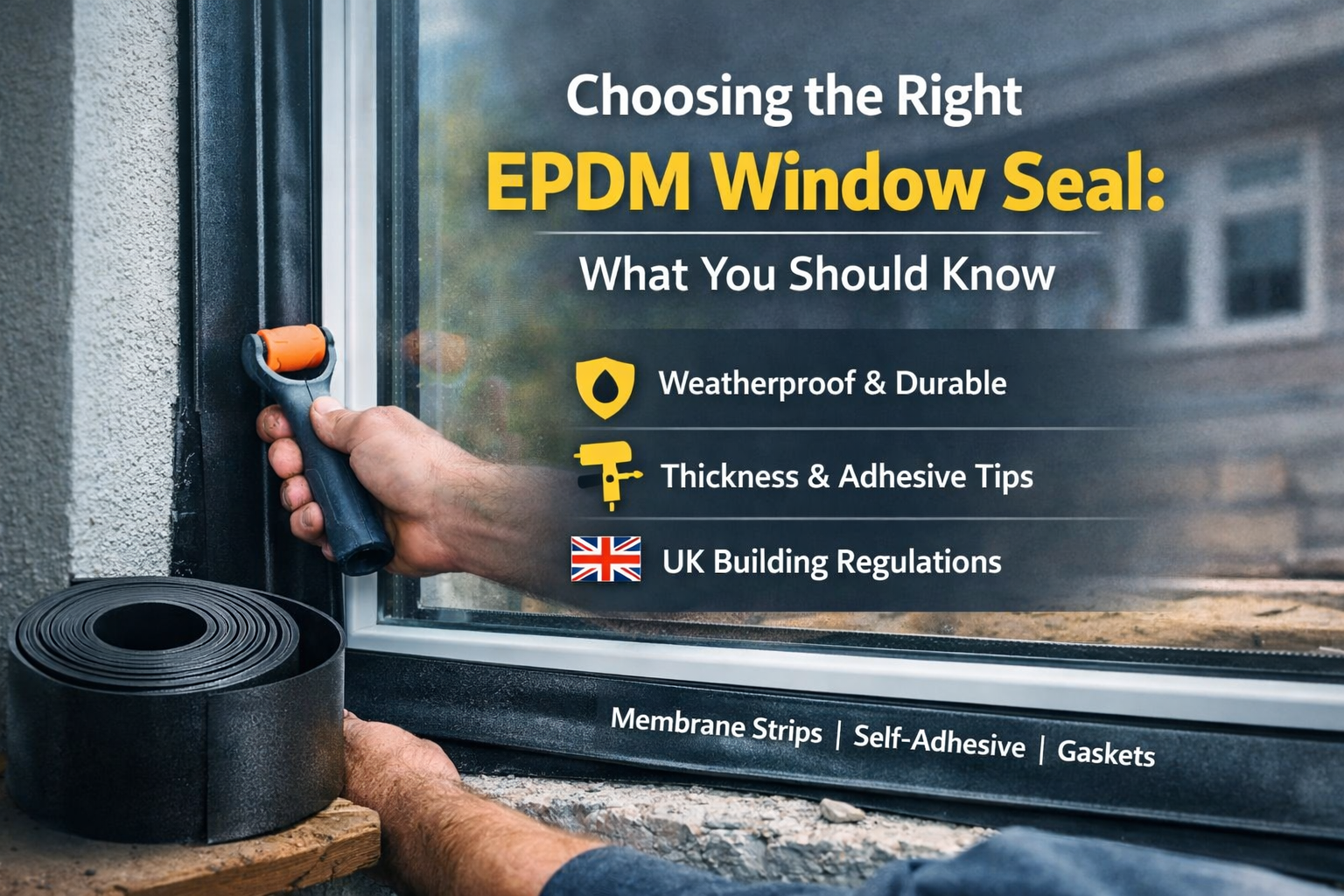
When it comes to keeping a building warm, dry, and protected from the unpredictable British weather, the smallest details can make the biggest difference. One of those details? The seal around your windows.
Whether you’re a professional installer, a builder working on a new development, or a homeowner tackling a renovation, choosing the right EPDM window seal is one of the smartest ways to improve both weatherproofing and airtightness. It’s a solution trusted across the industry for good reason EPDM is flexible, durable, and built to stand up to years of exposure.
In this guide, we’ll cover exactly what you need to know to choose the right EPDM solution including types of EPDM seals, thickness and adhesive compatibility, key UK compliance considerations, and how EPDM stacks up against other sealing methods.

What Is an EPDM Membrane and Why Does It Matter for Windows?
EPDM stands for Ethylene Propylene Diene Monomer, a synthetic rubber used widely across construction. You’ll often hear it mentioned in the context of EPDM roof membrane, but it’s just as valuable for window and façade sealing.
An EPDM membrane works as a protective barrier blocking wind driven rain and helping reduce draughts, heat loss, and moisture build up around window openings. In modern construction, where airtightness and thermal efficiency are expected as standard, EPDM membranes help deliver that “tight envelope” that buildings need.
Types of EPDM Seals (And Which One You’ll Actually Need)
Not every EPDM product works the same way, and choosing the right one depends on the job and the materials involved.
1. EPDM Membrane Strips
These are commonly used for sealing around window frames and junctions. They’re flexible and can be cut to size, making them ideal for both trade and DIY use.
Best for: window reveals, sills, and general air-sealing
2. Self-Adhesive EPDM Membranes
These come with adhesive already applied, making them faster to fit and especially convenient for clean, smooth surfaces. They’re a popular choice for installers who want speed and consistency.
Best for: quick fitting, smooth substrates, retrofit projects
Watch out for: dusty or porous masonry where adhesion may need support
3. EPDM Gasket-Style Seals
These are often used in glazing systems or where compression is required between two surfaces.
Best for: glazing channels, certain frame systems
4. EPDM Tape Systems (With Primer/Adhesive)
Some EPDM sealing systems rely on additional adhesives or primers for maximum grip particularly in harsher external conditions.
Best for: high exposure zones, professional applications, tricky substrates
The Big Two: Thickness and Adhesive Compatibility
If there are two things you should never “guess” when buying EPDM window membranes, it’s thickness and adhesive compatibility. These decide whether your seal lasts for years — or fails early.
Thickness: How Thick Should an EPDM Window Membrane Be?
The right thickness depends on:
- the gap size around the window
- the amount of movement expected (thermal expansion, settling, etc.)
- internal vs external use
- weather exposure levels
A thinner membrane is easier to fold into tight corners, but a thicker EPDM window membrane can offer better resilience on exterior detailing and larger junctions. If in doubt, match the membrane thickness to the exposure level and application.
Adhesive Compatibility: The Most Common Failure Point
Even the best EPDM membrane won’t perform if it’s bonded incorrectly.
Before installing, consider:
- whether your EPDM window seal is self-adhesive or requires a separate adhesive
- what the substrate is (timber, aluminium, concrete, uPVC)
- whether the surface is dusty, damp, or porous
- whether a primer is required
A quick rule: EPDM loves clean, dry surfaces. Preparation makes the difference between a seal that holds and one that peels.
Where EPDM Is Used (It’s Not Just for Windows)
Most people come across EPDM through EPDM windows or roof systems, but it’s actually used in a wide range of construction situations, including:
- Window sealing (frames, sills, reveals)
- Façade waterproofing
- EPDM roof membrane detailing (edges, abutments, penetrations)
- Construction joints where movement needs to be accommodated
This versatility is why EPDM suppliers in the UK continue to see strong demand for membrane based sealing solutions especially as building performance standards rise.
UK Building Compliance Standards: Why EPDM Helps You Stay on the Right Side of Regulations
In the UK, window sealing affects both energy and moisture control performance. While specific compliance requirements can vary depending on the build type, EPDM helps support good practice in the following areas:
Airtightness and Energy Efficiency
Well-sealed openings reduce uncontrolled air leakage and support energy performance goals typically linked to Part L expectations.
Moisture Protection and Condensation Risk
Proper sealing helps prevent wind-driven rain ingress and reduces condensation risk at junctions — closely aligned with moisture control and durability expectations seen in Part C.
In short: EPDM isn’t just a “nice-to-have.” It’s a material that supports the performance standards modern buildings are expected to meet.
EPDM Membrane vs Other Sealing Options
EPDM often gets compared to other methods like silicone, butyl, and bitumen-based membranes here’s the quick breakdown:
EPDM vs Silicone Sealants
Silicone works well for small perimeter finishing, but it can degrade, crack, or fail where there’s movement or larger gaps. EPDM provides a broader sealing layer and long-term flexibility.
EPDM vs Butyl Tapes
Butyl sticks well, but it can become messy, creep in heat, and doesn’t always handle UV exposure as well as EPDM.
EPDM vs Bitumen Membranes
Bitumen is common in roofing, but it’s less flexible for window detailing and can be harder to work with cleanly around frames and reveals.
If you’re aiming for a durable, professional finish, EPDM often offers the best balance of waterproofing + flexibility + lifespan.
Why Choose Dortech for EPDM?
If you’re searching for reliable EPDM suppliers UK, it helps to choose a supplier that understands trade demands and quick turnaround needs.
Dortech offers:
- A trusted UK supply chain
- Trade discounts and bulk deals
- Fast shipping and easy returns
Whether you need EPDM window membrane for a single job or you’re ordering for multiple installs, reliability and availability matter.
Customer Reviews

FAQs
What is EPDM used for?
EPDM is used for waterproofing and sealing in construction. Common applications include windows, façades, roofing detailing, and construction joints where flexibility and durability are required.
How long does EPDM membrane last?
EPDM is known for long-term durability and resistance to UV and weathering. When installed properly, it can last for many years in external and internal applications.
Can EPDM be painted?
In most cases, EPDM isn’t designed to be painted, and paint adhesion can be poor unless specialist coatings are used. If aesthetics matter, consider using trims or compatible coverings.
Do I need adhesive for EPDM window seals?
Often, yes. Some EPDM products are self-adhesive, but others require a compatible adhesive or primer. Always match the adhesive system to the substrate for best results.
Ready to Upgrade Your Window Sealing?
If you’re looking for a reliable EPDM membrane solution for windows, detailing, and waterproofing, you can view the product here:
Check Out Our Best-Selling Window Membranes
https://www.dortechdirect.co.uk/membranes-barriers/epdm-membrane.html
COMMENTS