

EPDM Glazing Tapes & Seals
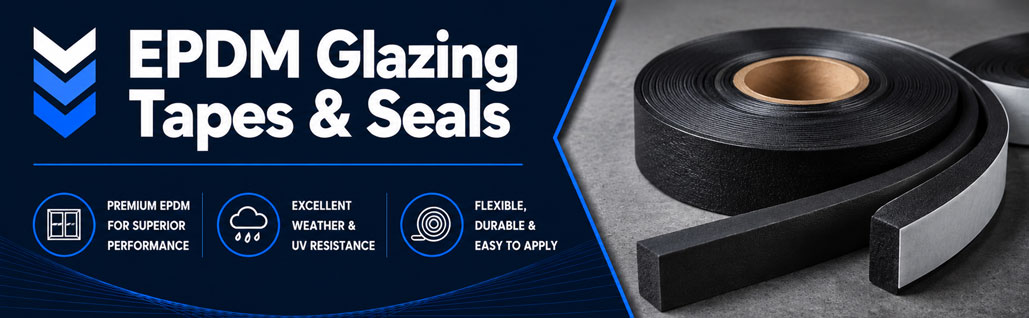
EPDM Glazing Tapes & Seals
Weatherproof Sealing Solutions for Glass and Panel Installation
EPDM glazing tape is a synthetic rubber sealing strip used to create weatherproof, airtight joints between glass, glazing panels, and window or door frames. Made from ethylene propylene diene monomer (EPDM) rubber, it's valued across the glazing, construction, and fenestration trades for its resistance to UV exposure, ozone, extreme temperatures, and prolonged moisture contact. Whether you're fitting double-glazed units, curtain walling, conservatories, or shopfronts, a reliable EPDM seal prevents water ingress, reduces air leakage, and helps maintain the structural integrity of the glazing system for decades rather than years.
Where EPDM Glazing Tape Is Used
EPDM tapes and seals are specified across a wide range of glazing and building envelope applications, including:
-
Sealing glass units into aluminium, timber, or uPVC window frames
-
Curtain wall and structural glazing systems
-
Conservatory roof glazing and rooflights
-
Shopfront and commercial glazing installations
-
Cladding panel and rainscreen sealing
-
Skylight and dormer window weatherproofing
Its flexibility allows it to accommodate minor frame movement and thermal expansion without cracking or losing adhesion, which is a common failure point with lower-grade sealing tapes.
Key Benefits and Performance Characteristics
Professional installers choose EPDM over general-purpose foam or PVC tapes for several practical reasons. EPDM rubber retains its elasticity across a broad temperature range, typically from around -40°C to +120°C, making it suitable for the UK's variable climate. It also offers strong resistance to ozone and UV degradation, meaning exposed seals won't perish, crack, or discolour as quickly as cheaper alternatives.
Look for tapes offering:
-
Consistent compression recovery for long-term seal integrity
-
Self-adhesive backing for faster, cleaner installation
-
Compatibility with most common frame and substrate materials
-
Compliance with relevant building and glazing standards
Choosing the Right Tape for Your Project
Tape thickness, width, and density should match the glazing bead gap and expected load. Thicker profiles suit larger tolerance gaps or older frame systems, while narrower tapes work well on modern precision-fit units. If you're unsure which specification suits your installation, our team can advise based on frame type and application.
Frequently Asked Questions
- What is EPDM glazing tape used for?
It's used to seal gaps between glass panels and window or door frames, preventing water penetration and draughts while allowing for minor movement and thermal expansion. - How long does EPDM glazing tape last?
When correctly installed, EPDM seals typically last 20-30 years due to their resistance to UV, ozone, and temperature extremes, significantly outperforming standard foam tapes. - Is EPDM tape better than foam glazing tape?
Generally yes for exterior or long-term applications. EPDM offers superior weather resistance and durability, whereas foam tapes are more prone to compression set and degradation over time.