

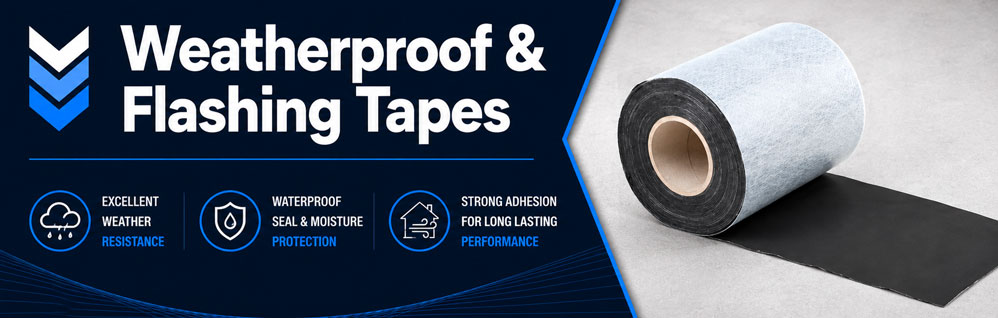
Weatherproof & Flashing Tapes
Keeping Water Out Where It Matters Most
Weatherproof and flashing tapes are used to seal joints, laps, and junctions where water ingress is a real risk, roof details, window reveals, cladding overlaps, and anywhere two materials meet and need to stay watertight. Unlike general purpose tape, these products are built to handle direct weather exposure over years, resisting UV, temperature swings, and repeated wetting and drying without the adhesive failing or the tape lifting at the edges. On most jobs, this is the difference between a detail that stays dry and one that quietly lets water in until someone spots a stain on the ceiling.
Common Applications
Weatherproof and flashing tape shows up on a fairly wide spread of external building details:
-
Roof flashings, valleys, and abutments
-
Window and door reveal sealing
-
Cladding laps and overlaps
-
Membrane and breather membrane junctions
-
Sealing around penetrations, pipes, and vents
-
Temporary weatherproofing during construction phases
Because these tapes are often the last line of defence against water before it reaches the building fabric, adhesion quality matters more here than on most other tape applications.
What Makes a Tape Genuinely Weatherproof
Plenty of tapes claim weather resistance, but the difference shows up after a few winters, not on day one. A proper flashing tape needs strong initial tack so it bonds immediately to damp or slightly dusty surfaces, since site conditions are rarely ideal. It also needs to stay flexible in the cold rather than stiffening and cracking, and to resist UV if any part of it will be exposed before cladding or covering goes on.
Worth checking before specifying:
-
Substrate compatibility, particularly with membranes, timber, or metal
-
Minimum application temperature
-
UV exposure rating if left uncovered for any length of time
-
Whether it's self-adhesive or needs a separate primer for reliable bonding
Getting Application Right
Even a good tape fails if it's applied to a wet, cold, or dusty surface. A bit of care with surface prep, and rolling the tape down firmly rather than just pressing it on, makes a noticeable difference to how long the seal actually lasts.
Frequently Asked Questions
- What's the difference between weatherproof tape and flashing tape?
The terms are often used interchangeably. Both describe tapes designed to seal external joints against water, though "flashing tape" sometimes implies a slightly heavier duty product for roofing specifically. - Can weatherproof tape be applied in wet or cold weather?
Some can, but performance varies by product. Check the minimum application temperature and whether the tape is rated for damp surface application before using it in poor conditions. - How long does flashing tape typically last once installed?
Good quality tape, properly applied, can last well over a decade, though lifespan depends on UV exposure and whether it's protected by cladding or left partially visible.