

Glazing Tapes
Bedding and Sealing Glass the Right Way
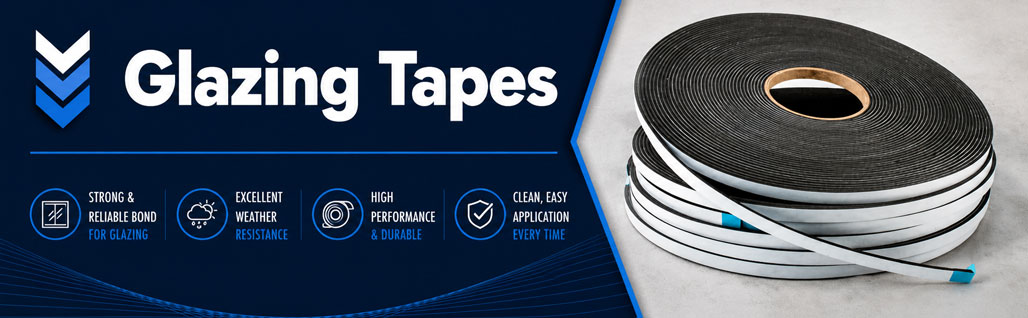
Glazing tape sits between glass and frame, doing a job that's easy to overlook until it fails: holding the pane securely, absorbing movement, and keeping water and air out of the joint. Rather than one single product, glazing tape covers a range of materials, foam, EPDM, and butyl among them, each suited to different frame types, glass weights, and exposure conditions. Choosing the right one affects how the whole window or door performs over its lifespan, not just how it looks on the day it's fitted.
Common Uses Across Glazing Work
Glazing tape turns up on most jobs involving fixed or fitted glass:
-
Bedding glass into timber, aluminium, and uPVC frames
-
Double glazed unit installation and replacement
-
Shopfront and commercial glazing
-
Conservatory and rooflight glazing
-
Secondary glazing and window refurbishment
-
Curtain wall and structural glazing systems
The right tape depends heavily on the glazing method, whether it's a dry glazed system relying on compression, or a wet glazed joint using sealant alongside the tape for extra protection.
Choosing Between Tape Types
Not all glazing tape does the same job, which is where a lot of mistakes happen. Foam tapes are cheaper and easier to work with but tend to compress permanently over time, losing their seal. EPDM rubber tape holds up far better under UV and temperature extremes, making it the better choice for exposed or long-term applications. Butyl tape, being permanently tacky rather than compressive, is often used where a continuous bond matters more than cushioning.
Worth checking before ordering:
-
Glass weight and thickness, since heavier units need firmer support
-
Expected exposure to sun, rain, and temperature swings
-
Compatibility with the frame material
-
Whether the application is dry glazed or wet glazed
Getting the Detail Right
A mismatch between tape type and glazing method is one of the more common causes of early seal failure. Getting advice on the right product for a specific frame and glass combination, rather than defaulting to whatever's cheapest, tends to save money in callbacks and repairs down the line.
Frequently Asked Questions
- What's the difference between glazing tape and glazing sealant?
Glazing tape provides a mechanical seal and cushioning between glass and frame, while sealant is a wet-applied product that cures. Many glazing systems use both together. - Which glazing tape lasts longest?
EPDM rubber tape generally outperforms foam tape for durability, particularly in exposed conditions, due to its resistance to UV and temperature extremes. - Can I use the same glazing tape for all window types?
Not always. The right tape depends on the glazing method, frame material, and glass weight, so it's worth checking compatibility before ordering rather than assuming one product suits every job.