

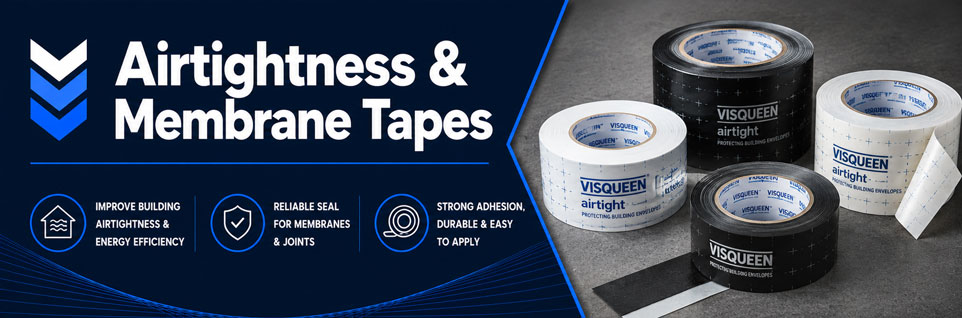
Airtightness & Membrane Tapes
Getting the Building Envelope Right
Airtightness tape is one of those products that never gets noticed when it works and causes real problems when it doesn't. These tapes seal joints, laps, and penetrations in breather membranes, vapour control layers, and airtight barriers, stopping uncontrolled air movement through the building fabric. Get it wrong and you end up with cold spots, condensation risk, or a failed air test on completion. Get it right and the building performs the way it was designed to, whether that's a new build chasing Part L compliance or a retrofit project aiming for better energy efficiency.
Where These Tapes Get Used
Airtightness and membrane tapes turn up on most jobs where a continuous air barrier matters:
-
Sealing laps and joints in breather membranes and vapour control layers
-
Sealing around window and door reveals
-
Roof to wall junctions and service penetrations
-
Timber frame and SIPs construction
-
Retrofit and refurbishment airtightness upgrades
The tape needs to bond properly to the membrane substrate, not just sit on top of it, which is why matching the right tape to the right material actually matters rather than grabbing whatever's cheapest.
What Separates a Good Tape From a Poor One
A tape that fails after a year defeats the purpose entirely. Look for strong initial tack combined with long-term adhesion, since membranes shift slightly as the building settles and moves through seasonal cycles. Vapour permeability also matters here. Sealing a breathable membrane with a non-breathable tape can undermine the whole system, so checking the tape's classification matches the membrane it's going on.
Things worth checking before ordering:
-
Compatibility with your specific membrane type
-
UV stability if the tape will be exposed before final cladding goes on
-
Application temperature range, since some tapes won't bond properly below a certain temperature
-
Whether it's suitable for internal or external use, or both
Getting the Detail Right on Site
Poor surface prep causes more failures than poor tape does. Dust, moisture, or cold surfaces all reduce adhesion, so a bit of care during application goes a long way toward a seal that actually lasts through the building's lifespan.
Frequently Asked Questions
- What's the difference between airtightness tape and standard building tape?
Airtightness tape is designed specifically to bond to membranes and create a durable, long-term seal against air leakage. General purpose tapes aren't tested or rated for this and tend to fail over time. - Do I need different tape for internal and external use?
Often yes. External tapes need UV resistance and weatherproofing, while internal tapes are chosen more for vapour control performance and adhesion to internal linings. - Can airtightness tape be applied in cold weather?
Some can, but many standard tapes lose adhesion below around 5°C. Check the product's minimum application temperature before working in cold or damp conditions.