

Liquid Waterproofing Membranes
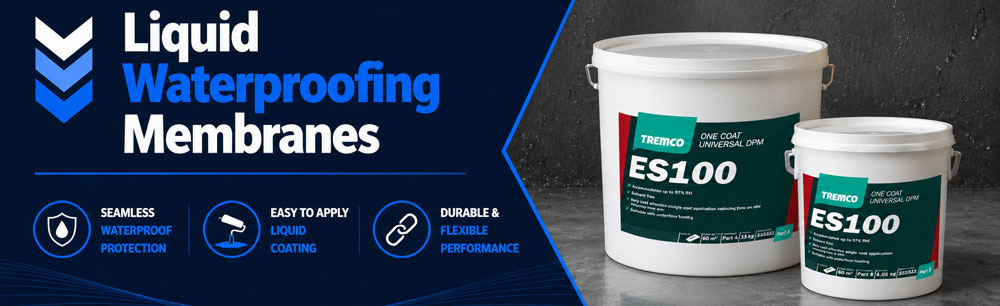
A Seamless, Trowel or Roller-Applied Waterproofing System
Liquid waterproofing membrane is a fluid-applied coating that cures to form a continuous, fully bonded waterproof layer, without the joints and laps that come with sheet membranes. Applied by roller, brush, or trowel depending on the product, it's particularly useful on complex shapes, awkward details, and junctions where fitting a sheet membrane neatly would be difficult or time-consuming. Because it cures in place rather than being joined together, there's no seam to fail, which is one of the main reasons it's chosen over traditional sheet systems on detail-heavy work.
Where Liquid Membranes Are Used
Liquid applied waterproofing turns up across a wide range of wet area and structural waterproofing jobs:
-
Balconies, terraces, and roof gardens
-
Wet rooms, bathrooms, and shower areas
-
Below-tile waterproofing on floors and walls
-
Flat roof detailing around upstands, outlets, and penetrations
-
Basement and below-ground tanking
-
Car parks and podium decks
-
Refurbishment work over existing roof coverings
It's especially useful for repairing or upgrading roofs with awkward existing detailing, where stripping back to a sheet membrane isn't practical or cost-effective.
Choosing the Right Liquid Membrane System
Different liquid membranes suit different substrates, movement requirements, and exposure conditions, so picking the right one matters more than with some other waterproofing types.
-
Polyurethane liquid membranes, flexible and UV stable, suited to exposed roofs and balconies
-
Acrylic liquid membranes, cost-effective for internal wet areas with lower movement demands
-
Cementitious liquid membranes, often used below tiling in bathrooms and wet rooms
-
Reinforced systems using fabric or mesh at movement joints and details
Worth checking before specifying:
-
Substrate compatibility, including concrete, screed, plywood, and existing membranes
-
Movement accommodation if the substrate is prone to cracking or thermal movement
-
UV stability and traffic rating if the membrane will be exposed or walked on
-
Number of coats and cure time required for full waterproofing performance
-
Reinforcement requirements at joints, upstands, and penetrations
Getting Application Right
Liquid membranes rely on even, full-coverage application and correct cure time between coats. Applying too thin, skipping reinforcement at movement joints, or covering the membrane before it's fully cured are common causes of early failure, usually showing up as pinholes or delamination rather than an obvious defect at handover.
Frequently Asked Questions
- Is liquid waterproofing membrane as durable as sheet membrane?
Good quality liquid systems, correctly applied, perform comparably to sheet membranes and offer the advantage of no joints, though substrate movement and application quality affect long-term performance more than with some sheet systems. - Can liquid membrane be applied over an existing roof covering?
In many cases yes, which is one of its main advantages for refurbishment work, though the existing surface needs to be sound, clean, and compatible with the membrane being used. - How many coats of liquid membrane are needed for a waterproof finish?
This varies by product, but most systems require at least two coats to achieve the specified dry film thickness and full waterproofing performance, with reinforcement at joints and details.