


Protection & Separation Membranes
Preventing Damage Between Incompatible Layers
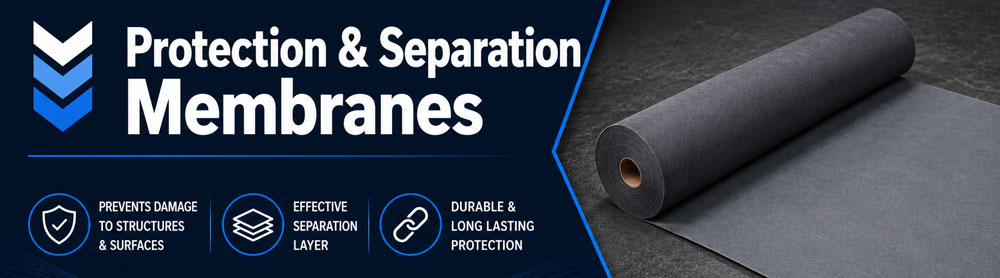
Protection and separation membrane is a sheet material used to keep two layers within a construction build-up from coming into direct contact, either to prevent physical damage during installation and use, or to stop chemically incompatible materials reacting with each other over time. It's a simple product doing an easy-to-overlook job, and skipping it is one of those shortcuts that rarely causes a problem immediately but often does within a few years.
Where Protection and Separation Membranes Are Used
These membranes turn up across a range of roofing, flooring, and waterproofing build-ups:
-
Protecting waterproofing membranes from ballast, insulation boards, or foot traffic
-
Separating incompatible insulation and membrane materials on flat roofs
-
Below screed protection over underfloor heating pipework
-
Green roof and ballasted roof build-ups
-
Podium decks and inverted roof systems
-
Protecting damp proof membranes during construction traffic
On inverted roof systems particularly, the separation membrane sits between the insulation and the ballast or paving above, stopping the insulation from being crushed or punctured while still allowing water to drain through to the waterproofing layer beneath.
Why Material Compatibility Matters
Not every membrane and insulation combination gets on. Some insulation types can be chemically attacked by direct contact with certain waterproofing membranes or bitumen products, breaking down over time even though nothing looks wrong on the surface for years. A separation layer isn't just about physical protection, it's often the only thing preventing a slow chemical reaction between two materials that were never meant to touch directly.
Worth checking before specifying:
-
Chemical compatibility between the membrane and adjacent materials
-
Puncture and tear resistance for the level of traffic or loading expected
-
Whether the membrane needs to allow drainage, such as on inverted roofs
-
UV resistance if any part will be exposed before final finishes are applied
-
Thickness suited to the loads and point pressures involved, such as ballast or paving slabs
Getting the Detail Right on Site
Protection membrane is easy to treat as an afterthought, rolled out quickly at the end of a job to tick a box. Doing that properly, with adequate overlap and coverage across the full area rather than just the obvious traffic routes, is what actually protects the layer underneath. Damage that happens during construction, from trolleys, ballast being tipped, or trades walking across an unprotected membrane, is far more common than damage occurring once the building is finished and in use.
Frequently Asked Questions
- Why can't insulation sit directly against a waterproofing membrane?
Some insulation and membrane combinations are chemically incompatible, and direct contact can cause the materials to degrade over time. A separation layer prevents this reaction while still allowing the build-up to function correctly. - Does protection membrane affect drainage on a roof?
Good quality separation membranes used on roofs, particularly inverted or green roof systems, are designed to allow water to pass through to drainage points while still protecting the layers above and below. - Is protection membrane necessary if the waterproofing layer is already durable?
Yes, in most cases. Even durable membranes can be damaged by point loads, ballast, or foot traffic during construction, and a protection layer significantly reduces the risk of punctures that might otherwise go unnoticed until a leak appears.